History · Grades 5–6 and 7–8
Rumour Relay
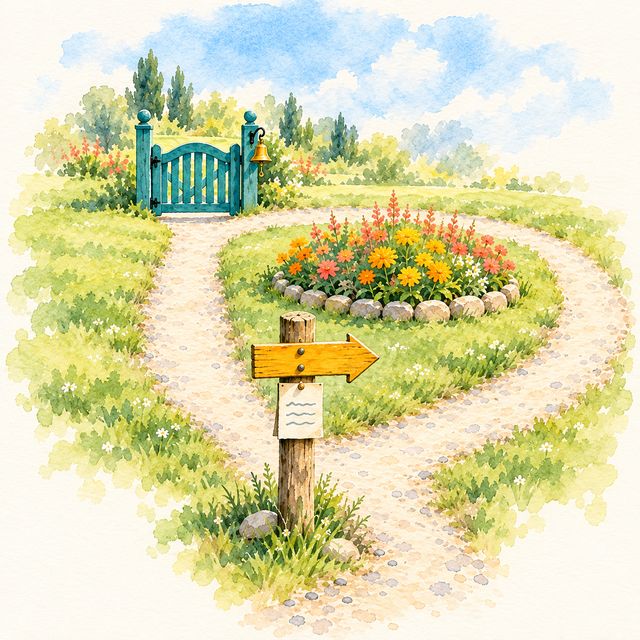
Your child checks a story that seemed to predict the future, and says what the records show and what they leave open.
Your child sorts what people saw or heard from what they inferred, judges a note and its retelling against small outcomes, puts four timed records in order to find a contradicted claim, and finds the record a true sentence leaves out.
- Grades 5–6 and 7–8
- 15 min
- Nothing to prepare
- On the screen
Free to sign up.
Is it a good fit?
- Ready if Your child can add minutes to a time and read two sentences side by side.
- Too much today? Start with Before the headline: what happened first, before a story became a headline.
- Too easy? The Grade 7–8 level: more choices at each question.
What your child practises
- Telling seen from inferred
- Comparing a retelling with its source
- Ordering records to test a claim
- Spotting a true sentence used to mislead
“That's true, but it leaves out the arrow. It already pointed the wrong way before the note went up.”
If your child says something like this, in their own words, the idea has landed. Finishing the rounds means they took part; this is the learning.
Your part
- Nothing for the game itself
- Each question has a Read it to me button
- Play it as the checker, if your child wants a partner
Take it off the screen (optional)
Next time a story is passed on, ask what the person had to go on, and what a true detail might be leaving out.
More like this
The full design
What it is
Checking a story before it becomes a legend. At a library's events morning a note warned that some teams might miss the bell; Blue Team did, and now people say the note knew. Your child sorts what people saw or heard from what they inferred, compares the note's own words with the newsletter's retelling, puts the records in time order to test a claim, and finds the record a true sentence leaves out. It is the companion game of the storybook The Rumour That Knew Tomorrow and asks for the same four habits on a case of its own, with its own facts and times; it plays the same without the book.
How it goes
Seen, heard or inferred: each card says first what the person had to go on, then what they said, and your child sorts it (the caretaker, standing at the signpost at 08:40: the arrow pointed down the parking lot loop, away from the garden path; a volunteer inside the shed with the door shut: the bell rang at 09:00; the events lead, who has only read the caretaker's log: someone changed it as a joke). Inferred means drawing a conclusion from clues, which can be well supported, uncertain or mistaken. Then the caretaker's 08:40 look on its own: it cannot tell who changed the arrow, or exactly when. The note and the retelling: the note itself says "Some teams may miss the bell"; the newsletter says "Blue Team will miss the bell". Your child finds the two changes (Some teams became Blue Team, may became will), then judges outcomes against each sentence before the theatres show a verdict: all four teams in the garden for the bell fits the note, because "may" does not promise a miss, and conflicts with the newsletter; Blue Team late fits both. The summary is put right with wording that keeps the note's meaning. The records in order, against a claim: four records with their printed times and who wrote them (08:40 the caretaker's log; 08:50 the note posted; 08:55 Blue Team leaves the library steps and follows the arrow down the parking lot loop; 09:00 the bell), put in time order. Then the drawn map and its travel model (each time covers the whole journey from the steps into the garden, walked without stopping; 3 minutes by the garden path, 7 by the loop): the model gives 09:02, two minutes after the bell. Your child names the record that says which route Blue Team took, finds the claim the order contradicts ("The note was posted before the caretaker found the arrow pointing down the parking lot loop") and the two records in conflict, 08:40 and 08:50. A true sentence used to prove too much: the newsletter's headline, "Proof that the writer knew the future!", over the true sentence "The note went up before Blue Team even set off". Your child finds the earlier record it left out (08:40) and says why it matters: a possible cause of lateness was already there before the note went up. The case card separates what was recorded, what the model gives, and what is still unknown: who changed the arrow, why and exactly when, when the note was written, and what its writer knew. Printed from this page, the same case works on paper.
The Pet
It asks the question of each step and points at the evidence when a choice is not yet right: what the person had to go on, the printed times, the 08:55 sheet, the phrase that says which teams, the word that says how sure. It never says more than the supplied records show: a claim they do not contradict is "not contradicted", one they cannot settle is "not established, and not disproved". In partner play the proposer chooses and names the evidence and the checker asks what supports it and what is unknown; the Pet never claims to have heard a spoken answer. Played alone, the checker's questions are on the card.
By band
7–8: four rounds, as below. 5–6: the same four rounds with shorter instructions and fewer choices (four statements to sort instead of six, two outcomes to judge instead of three, three summaries, three arrival times, three claims).
What it grows
The Library of Congress's primary-source questions ask what a record shows, who made it and when; the C3 Framework asks Grade 6 to 8 students to find the limits of the historical record and to build an argument from the evidence that applies (D2.His.10.6-8, D2.His.16.6-8). Telling an observation from an inference is the first of those limits.
Done, and what counts as evidence
Done means four rounds completed, by their steps or by reading the solution explained when a step stayed stuck. Each round's explanation can be opened and reread under its question, and the finish counts hints and explanations apart. The methods were practised in this case, which is not proof of media literacy. The best record is a conversation: what did someone have to go on, what did the retelling change, and what does a true sentence leave out?
What's personal
Nothing: the case, the library and the teams are made up for the game, and no family facts are asked for or kept.