History · Grades 5–6 and 7–8
Halloween Night Ops
Your child plans a night out, keeps the plan, and says it kindly to a friend.
Your child plans a Halloween night with two friends on a picture map, then meets a shortcut, a wrong turn, an invitation and the minutes before eight, and chooses each time what to do and how to say it.
- Grades 5–6 and 7–8
- 15 min
- Nothing to prepare
- On the screen
Free to sign up.
Is it a good fit?
- Ready if Your child has been out with friends with a grown-up nearby.
- Too much today? Start with Treasure walk: following a picture map on a real walk, for younger children.
- Too easy? The Grade 7–8 level: the reason each answer keeps the plan.
What your child practises
- Planning a route and a time home
- Crossing where drivers expect you
- What to do if someone is lost
- Saying no to a friend so they feel heard
“That's not on our plan. What if we go the long way?”
If your child says something like this, in their own words, the idea has landed. Finishing the rounds means they took part; this is the learning.
Your part
- Nothing for the game itself
- Each question has a Read it to me button
- Make a real night plan together before the next one
Take it off the screen (optional)
Make your own night plan together: who, which streets, where to meet if you lose each other, what time is home.
More like this
The full design
What it is
Planning a night out with friends, and keeping the plan when it is tested. Your child plans a Halloween night round three streets with Priya and Theo, then meets four moments where the plan could bend: a shortcut, something going wrong, an invitation, and the last minutes before eight. Each time they choose what to do and how to say it to a friend. It is the game of the storybook The Halloween Night Quest, and plays well without it.
How it goes
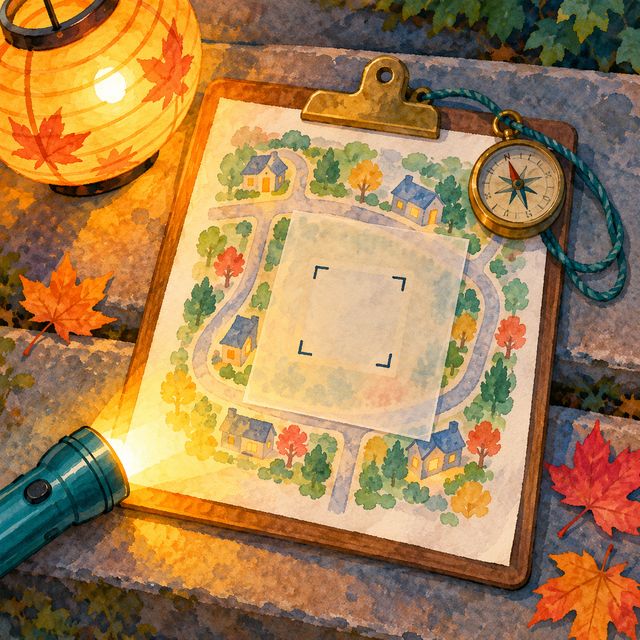
The plan is made on a painted map: the route drawn, the crossing tapped (the gap between parked cars says why not). Then each mission shows where it happens and what happens, and offers four ways to answer: say it straight, ask a question, offer another way, call a grown-up, or the tempting one. What follows shows what the answer did: the friend's words and face, the minutes it cost on the story clock, and a symbol for the trail card when the plan held. At the hall your child lays the card on the lantern and names the picture.
The Pet
It notices how a friend feels, asks which answers keep the plan, and never chooses. Its dare is away from the screen: plan a real walk with your family, which the game never sees or keeps.
By band
5–6: the plan (which way round, the one place to cross the busy road, what to do if someone is lost, one extra thing) and four missions, each with three answers that keep the plan and one that is tempting. 7–8: the same night, and after every answer that keeps the plan, the reason it keeps it.
What it grows
Health Canada advises older children to go out in a group, on a route planned with the family, with a time to be home; Parachute advises crossing at corners and lights, and being seen. The game practises the plan and the way it is said; every grown-up in it is kind, and it never says strangers are the danger.
Done, and what counts as evidence
Done means the night planned, four moments answered and the picture named. The way your child chose to talk to a friend is an observation you may keep. The best record is off the screen: a real night plan made together.
What's personal
Nothing: the map and the streets are the game's, the same for every family, and no family facts or real places are asked for. The book's own pages show only to a child who has finished the book.